Supporting the whole person
You are more than a diagnosis, a symptom or a difficult season.
Integrative counselling recognises that wellbeing is shaped by many interconnected parts of life. What you're experiencing emotionally may be connected with your relationships, physical wellbeing, environment, past experiences, beliefs, identity or the demands you're carrying.
Rather than using a one-size-fits-all approach, I draw from evidence-informed therapeutic approaches and adapt our work to your individual needs, strengths and goals.
Together, we can explore what's happening beneath the surface, understand how different areas of your life may be influencing one another, and develop practical strategies that support meaningful and sustainable change.
Emotional • Mental • Relational • Physical • Spiritual • Personal
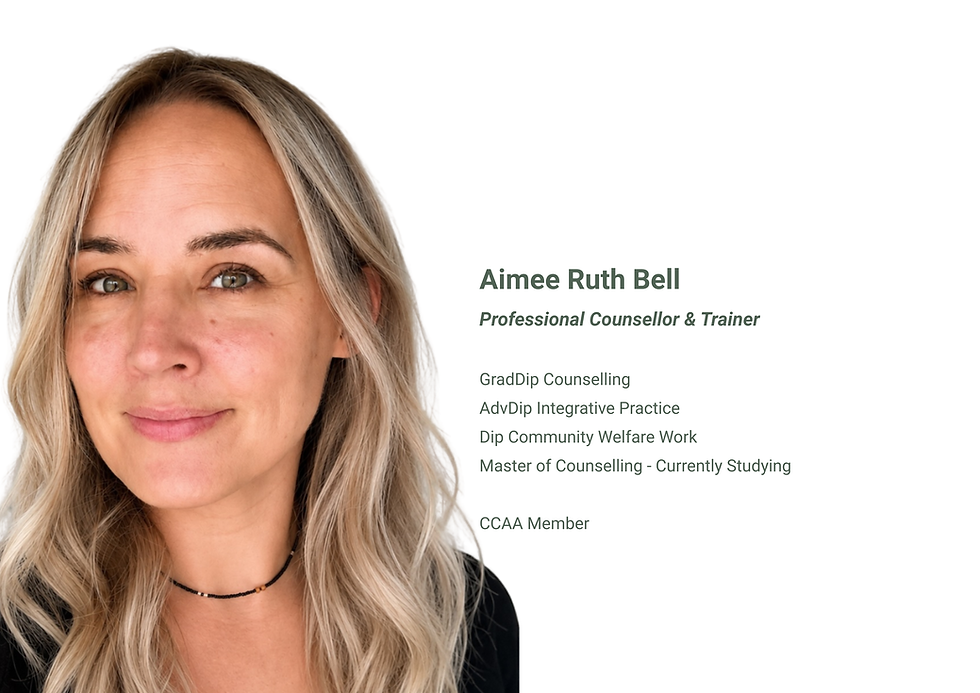
HI, I'M AIMEE
I'm a counsellor, but I'm also a real person who knows that life can be complicated, messy and sometimes very different from how it looks from the outside.
I've always been interested in people — what shapes us, why we respond the way we do, what happens beneath the behaviour others see, and what actually helps people grow and change.
And some of that comes from lived experience.
I've navigated my own seasons of change, challenge, growth and discovering things about myself that made me look back at parts of my life very differently. Being diagnosed with AuDHD later in life was one of those experiences. It gave language and context to things I had spent years trying to understand.
That experience has shaped something I care deeply about in counselling: looking beyond what's visible.
Sometimes what looks like procrastination is overwhelm. What looks like withdrawal might be exhaustion. What looks like someone not trying might actually be someone using everything they have just to keep functioning.
I know what it's like when the usual advice doesn't quite fit — and how significant it can be when somebody finally takes the time to understand what's actually going on.
That doesn't mean I'll assume your experience is the same as mine. It means I'll be curious about your experience.
WHAT OUR SESSIONS LOOK LIKE
I'm fairly relaxed and down-to-earth during our sessions. You don't need to arrive with a perfectly organised explanation of what's wrong. You can lose your train of thought, change direction, laugh, cry, need time to think, bring notes, move around, or tell me that something I've suggested doesn't work for you.
That's useful information. And while being genuinely heard matters, I don't want to only sit and listen to you week after week.
I love helping people understand why something is happening and then working out what we can actually do with that understanding. That might mean noticing a pattern you've never recognised before, learning a regulation strategy, experimenting with a different way of communicating, understanding your nervous system, identifying a boundary, finding accommodations that work for your brain, challenging something you've believed about yourself, or developing practical tools you can take into everyday life.
Sometimes the work is deep and reflective. Sometimes it's practical. Often it's both.
I want you to leave counselling not only feeling heard, but also increasingly understanding yourself and having something useful to work with.
WHY I'M PASSIONATE ABOUT THIS WORK
One of the things I love most about counselling is watching someone begin to understand themselves differently.
There can be a significant shift when the question changes from:
“What's wrong with me?”
to:
“What's actually happening here — and what do I need?”
I love helping people recognise strengths they may have overlooked, understand patterns that haven't made sense before, develop tools that genuinely fit them, and make changes that feel achievable in real life.
I'm especially passionate about people who have spent a long time feeling misunderstood, trying harder, masking, adapting or wondering why things that seem easy for everyone else can feel so difficult for them. But you don't need to be neurodivergent to work with me.
I work with people navigating anxiety, trauma, burnout, relationships, grief, identity, family challenges, major transitions and those seasons where you simply know something needs to change but you're not quite sure what that looks like yet.
MY INTEGRATIVE APPROACH
I am also trained as an integrative practitioner. That means that I don't see counselling as working only with your thoughts and emotions. You're a whole person, and every part of your life can affect the others.
Your emotional wellbeing can be influenced by relationships, physical wellbeing, sleep, environment, sensory demands, past experiences, responsibilities, beliefs, identity, purpose and the season of life you're currently navigating. That's why my approach is integrative.
Depending on what you need, I can draw from counselling and evidence-informed therapeutic modalities, psychoeducation, strengths-based approaches, practical strategies and appropriate coaching tools.
For clients who want it, Christian faith, spirituality and spiritual formation can also be integrated into our work. Faith is never assumed or imposed; it's simply another dimension of the whole person that we can explore when it's important to you.
Together, we can look at the different dimensions of your life:
-
Emotional — feelings, regulation, triggers and emotional needs
-
Mental — thoughts, beliefs, attention, processing and executive functioning
-
Relational — relationships, attachment, communication, boundaries and connection
-
Physical — sleep, energy, sensory needs, stress responses, environment and capacity
-
Personal — identity, strengths, values, purpose, goals and the life you're building
-
Spiritual — faith, meaning, beliefs and spiritual formation, when you want this included
We don't need to address every area. The point is that we don't have to pretend they exist separately.
Sometimes understanding what's happening in one part of your life means looking at what's happening in another.
A LITTLE MORE ABOUT ME
Outside of counselling, I love nature, travelling, learning, creativity and spending time with the people who matter to me.
I'm naturally curious. I like understanding how things work, asking questions and continuing to learn — which is probably one of the reasons counselling suits me so well.
I'm also someone who values authenticity. I'm not interested in presenting a perfectly polished version of what life is supposed to look like.
Life has seasons. People change. Sometimes we outgrow things. Sometimes life knocks things around. Sometimes we discover something about ourselves that changes how we understand everything that came before it.
And sometimes we need someone beside us who can help us make sense of it and work out what comes next.
That's the kind of counselling space I want Refined to be.
PROFESSIONAL QUALIFICATIONS
-
Graduate Diploma of Counselling
-
Advanced Diploma of Integrative Practice
-
Diploma of Community Welfare Work & Counselling
-
Certificate IV in Christian Ministry & Theology
-
Certificate IV in Training & Assessment
-
Master of Counselling — Current
-
Graduate Certificate of Arts (Ministry & Leadership) — Current
I am a Qualified Member of the Christian Counsellors Association of Australia (CCAA) and undertake ongoing professional development and clinical supervision.
THINK WE MIGHT BE A GOOD FIT?
Finding a counsellor you connect with matters.
If the way I work sounds like what you've been looking for, you're welcome to book a session and we can start from wherever you are.